
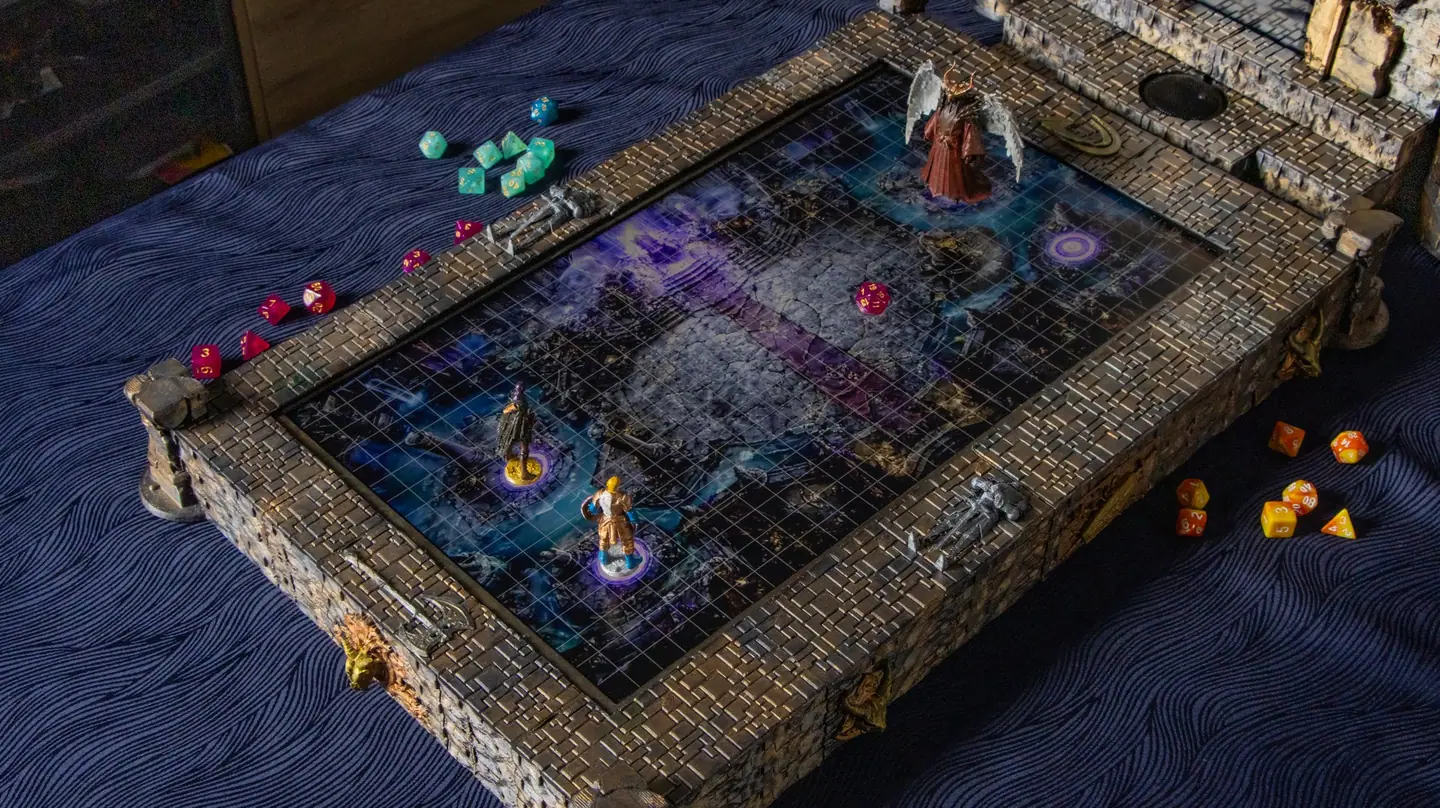
Physical digital gaming describes experiences in which physical objects and digital systems are part of the same game rather than separate versions of it.
A simple example is a board game that uses an app for audio or hidden information. More advanced systems can use cameras, sensors, displays, connected pieces or AI so the software responds to events at the physical table.
Why combine the two?
Physical games are good at social presence and tactile interaction. Digital systems are good at managing information, generating media, remembering state and updating content quickly.
A hybrid system can use each medium for the job it handles best.
For tabletop role playing games, that may mean keeping real dice, miniatures and face to face conversation while using digital maps, fog of war, campaign memory, audio and generated scenes.
The interface is the difficult part
Poor physical digital design can create more work than it removes. If a player moves a miniature and then has to move the same token again on a laptop, the system is duplicating effort.
The goal should be a single action with multiple consequences. Computer vision is one way to achieve this because software can observe some physical interactions directly.
Realm Kinetics is developing Doungim as a physical digital tabletop console. Its screens, camera, microphone and software are designed to sit around the existing actions of tabletop play.
The broader opportunity for physical digital gaming is not to turn every board into a screen. It is to create interfaces where digital systems understand enough of the physical experience to add something useful without taking over.