
Most game interfaces are explicit. A player presses a key, moves a stick or taps a screen and the software receives a structured command. Computer vision makes a different kind of interface possible: the game can observe the physical world through a camera and interpret what it sees.
That opens interesting possibilities for gaming hardware.
From image capture to game state
A camera alone does not understand anything. Computer vision systems analyse frames to identify objects, positions, motion, numbers or patterns. In a game, those observations can be translated into state.
Examples include recognising a physical die result, tracking the position of a miniature, detecting that an object moved or understanding where activity is happening on a play surface.
The difficult part is reliability. Lighting changes, hands cover objects, pieces look similar and cameras view the table from imperfect angles. A useful product therefore has to combine vision models with calibration, confidence thresholds and game specific logic.
Why tabletop gaming is an interesting use case
Tabletop players already manipulate meaningful physical objects. Dice represent uncertainty. Miniatures represent characters and positions. Computer vision can connect those objects to digital systems without forcing players to replace them with virtual equivalents.
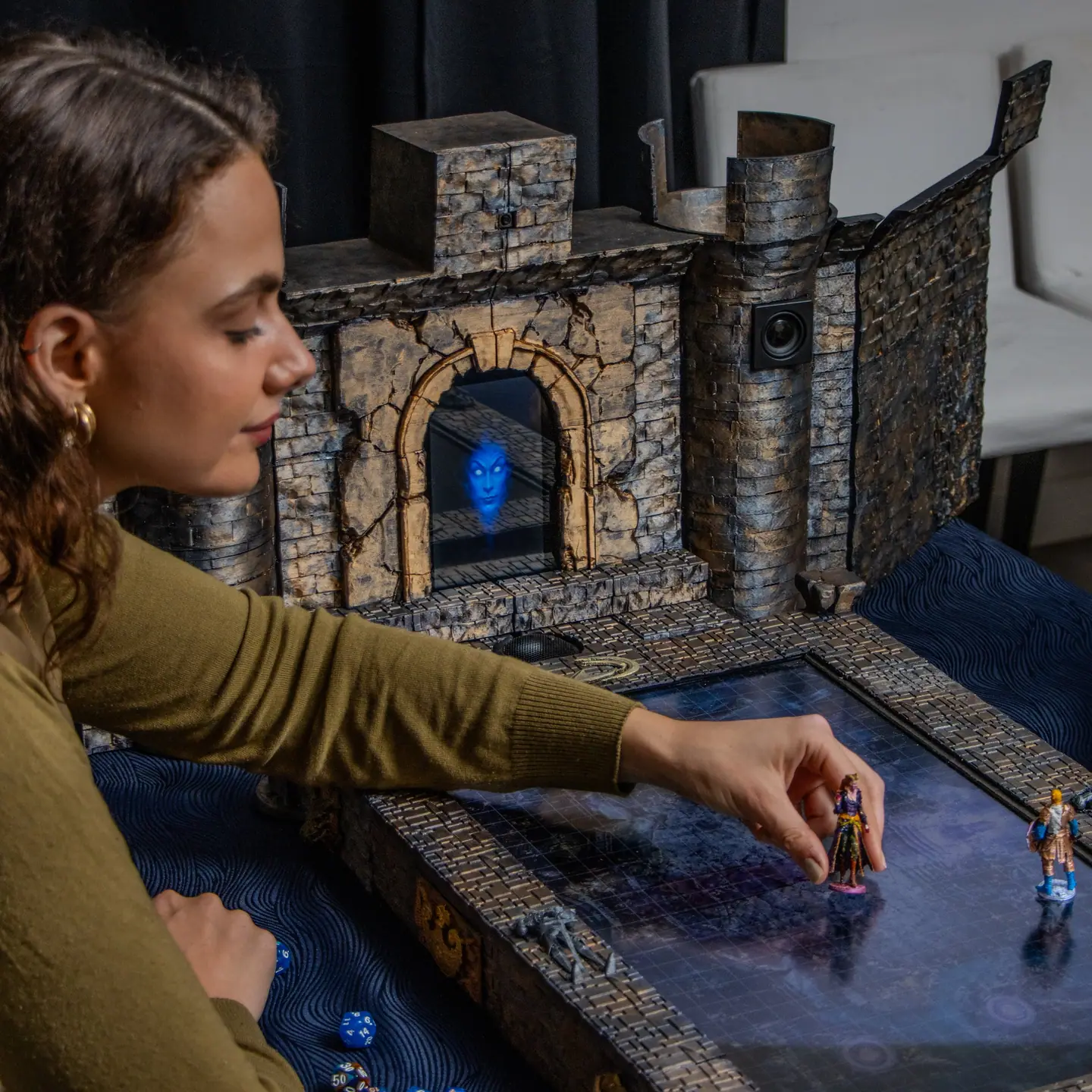
Realm Kinetics is developing Doungim with a built in camera as part of that physical digital interface. The console is designed to work around real dice and miniatures while software manages the digital layer.
Computer vision can therefore change gaming interfaces in a subtle way. Instead of asking players to tell the computer everything through a controller, the system can begin to understand parts of what the players are already doing.