
Tabletop gaming has repeatedly absorbed digital technology without abandoning the table. Groups use online character sheets, digital maps, music, virtual tabletops and video calls, often alongside physical books, dice and miniatures.
That pattern suggests the future is unlikely to be purely analogue or purely digital.
Physical play remains valuable
The table creates social presence. Players can see reactions, move objects and share one physical space. Those qualities are difficult to reproduce entirely through individual screens.
Digital systems are good at complexity
Software can manage hidden information, calculate state, update maps, store campaign history and generate new content quickly.
AI adds another capability: interpretation. Systems can begin to understand natural language commands, campaign context and visual information from the table.
Integration is the opportunity
The next generation of tabletop systems can combine those strengths. Instead of asking players to choose between real miniatures and a digital map, the system can make the physical miniature meaningful to the digital layer.
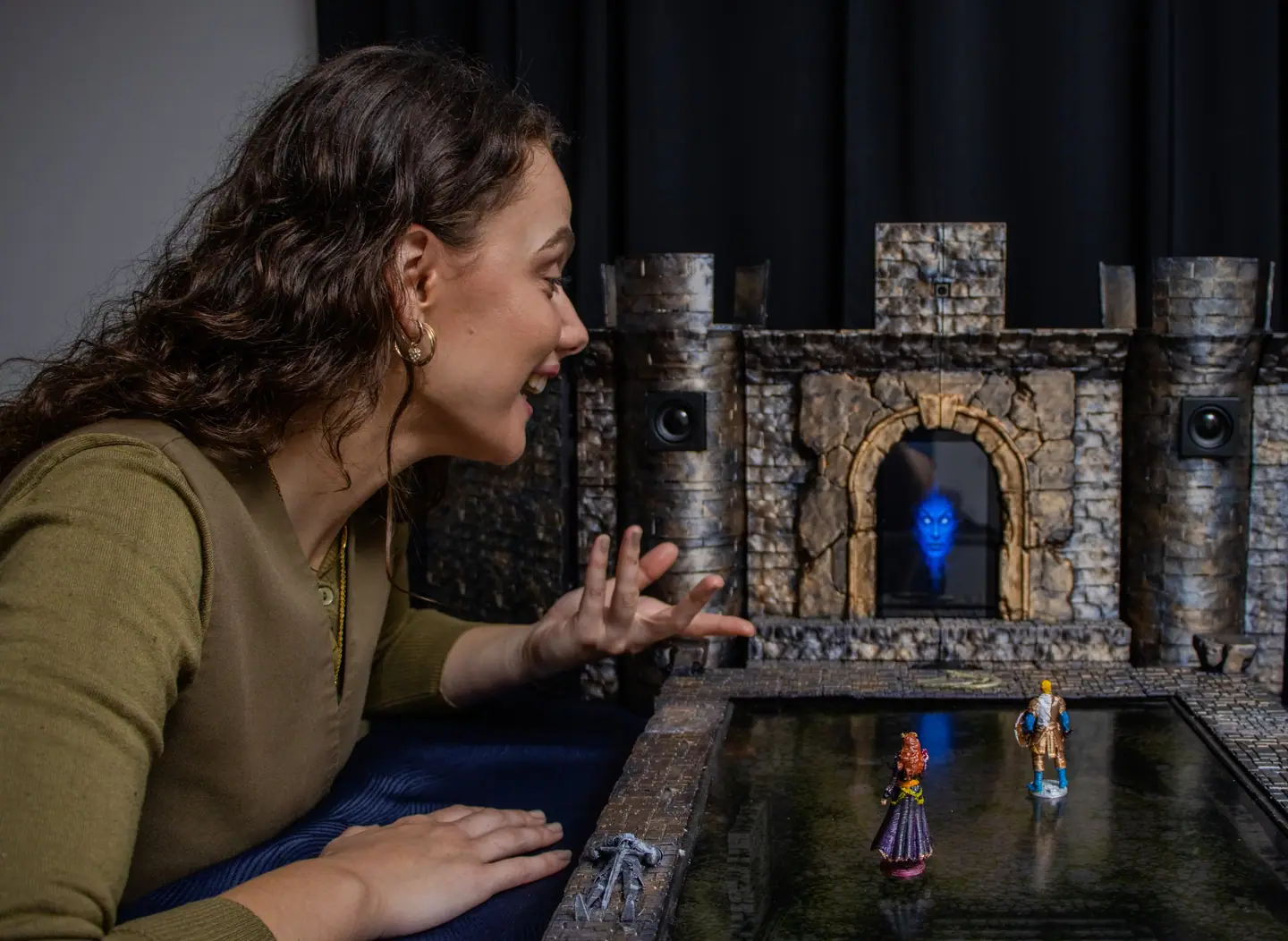
Realm Kinetics is developing Doungim around this hybrid direction. Its console combines displays, camera, microphone, speakers and AI assisted software while keeping physical dice and miniatures in play.
The future of tabletop gaming will not be defined by how much technology is added. It will be defined by whether the technology disappears into the flow of the game and leaves the group with more attention for the story.