
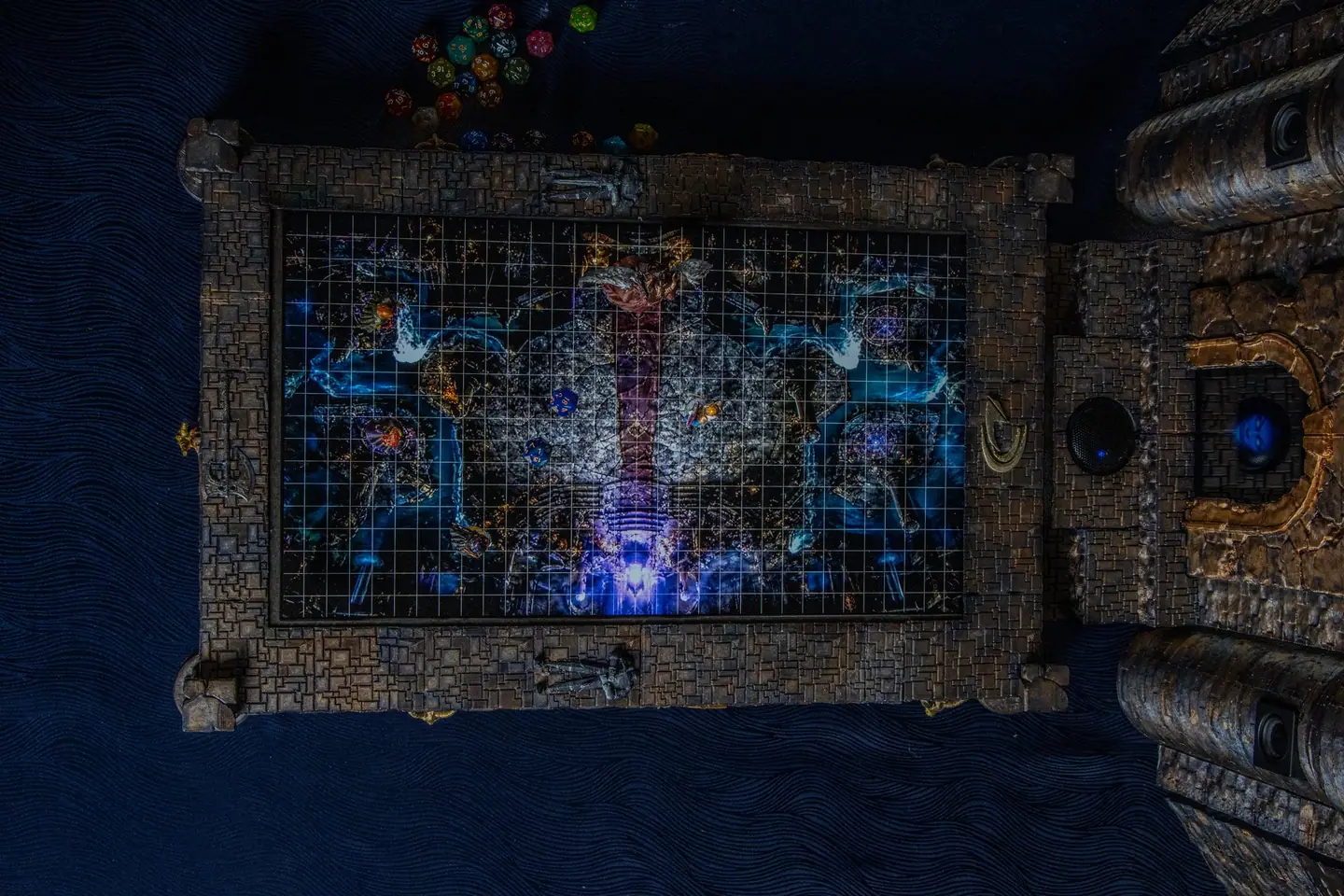
Miniatures are one of the clearest examples of physical state in a tabletop game. Their position can represent distance, line of sight, formation, danger and tactical intent. Digital systems usually require players to reproduce that movement with a mouse or touchscreen.
Computer vision offers another approach: observe the physical miniature itself.
What tracking actually requires
The system needs to identify an object, estimate its position on the play area and update that position as the piece moves. That sounds similar to general object tracking, but tabletop conditions add constraints.
Several miniatures may look alike. Players may pick them up, rotate them or temporarily hide them behind hands or terrain. The camera may also need to map image coordinates to the coordinate system of the game map.
Calibration is therefore central. The software has to understand how the camera's view corresponds to the physical display or play surface.
Why tracking is useful
If the system knows where miniatures are, digital effects can respond without requiring duplicate input. Fog of war, lighting, zones, measurement and contextual information can potentially react to what players do with physical pieces.
The important experience is that the player moves the miniature once.
Realm Kinetics is developing Doungim around this kind of physical digital interaction. The camera is part of the console's ability to understand tabletop activity while players continue using physical pieces.
Miniature tracking illustrates a wider design principle for connected tabletop hardware: technology should observe and support the actions players already enjoy rather than asking them to perform the same action twice.