
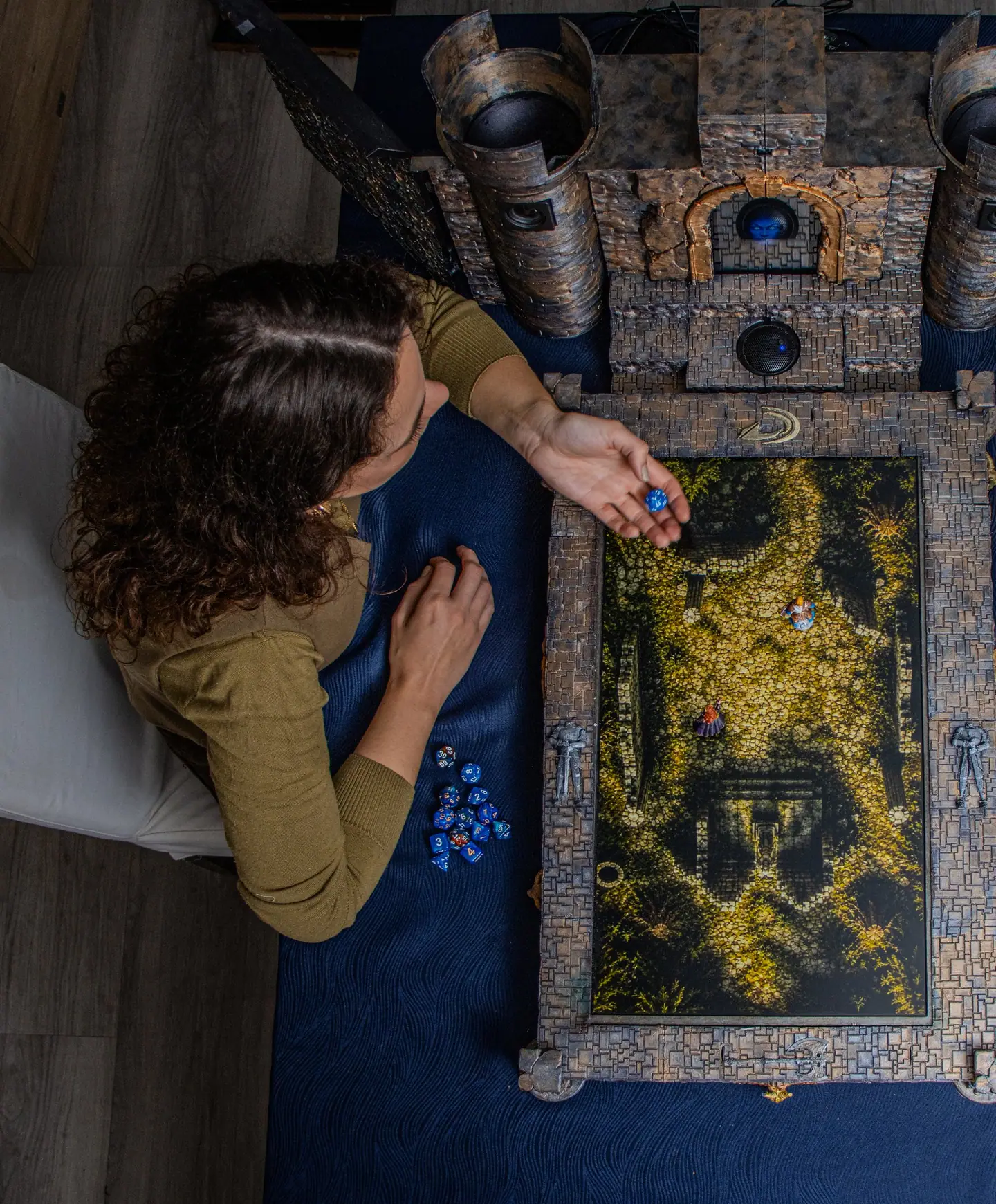
An AI Game Master is a system that can take on some or all of the responsibilities normally handled by the person running a tabletop role playing game. Depending on the product, that can mean anything from answering rules questions to describing scenes, controlling characters, tracking state and generating an adventure.
The phrase covers two very different ideas, so it is useful to separate them.
AI as a Game Master assistant
In assistant mode, a human remains in charge. AI can help recall campaign details, generate a map, suggest an encounter, handle repetitive tracking or provide quick information. The human Game Master decides what becomes part of the game.
This model is useful because it preserves human authorship while reducing workload.
AI as the Game Master
In a full AI GM mode, the system runs the session itself. That requires much more than conversational output. It must understand player actions, apply rules, remember earlier events, manage hidden information, control pacing and keep the story moving when the players do something unexpected.
Consistency becomes a major challenge. A system that tells a compelling story but forgets the locked door from ten minutes ago is not functioning as a Game Master.
Control is part of the design
Realm Kinetics is developing Doungim to support both GM assistance and a Solo GM mode. The wider product combines voice interaction, campaign context and tabletop hardware so the AI is connected to what is happening at the physical table.
That distinction matters. An AI Game Master should not simply be a chatbot placed beside a board. The role depends on maintaining game state, interpreting the session and presenting information to the right people at the right moment.
As the category develops, the most important question will not be whether AI can narrate fantasy prose. It will be whether an AI system can manage the practical responsibilities that make a shared tabletop game coherent.