
Tabletop games have always depended on human imagination. That is exactly why AI is interesting in this space: the strongest use cases are not about turning the table into a conventional videogame, but about reducing the mechanical work surrounding an improvised story.
A Game Master may need to remember an NPC introduced months ago, answer a rules question, generate a location because the party went in an unexpected direction, keep track of initiative and maintain the pace of the session. Those jobs are different, but they share one characteristic: they consume attention that could otherwise stay on the players and the story.
AI as a layer around the table
AI can help with preparation by producing starting points for locations, encounters and characters. During play, it can interpret spoken requests, retrieve campaign information and create new material in response to what the group actually does.
The more important change is real time use. If a system only helps before the session, it is another preparation tool. If it can understand what is happening while people play, it can become part of the table itself.
That requires more than text generation. A tabletop system may need memory, rules awareness, audio input, visual context and the ability to update what players see.
Keeping physical play physical
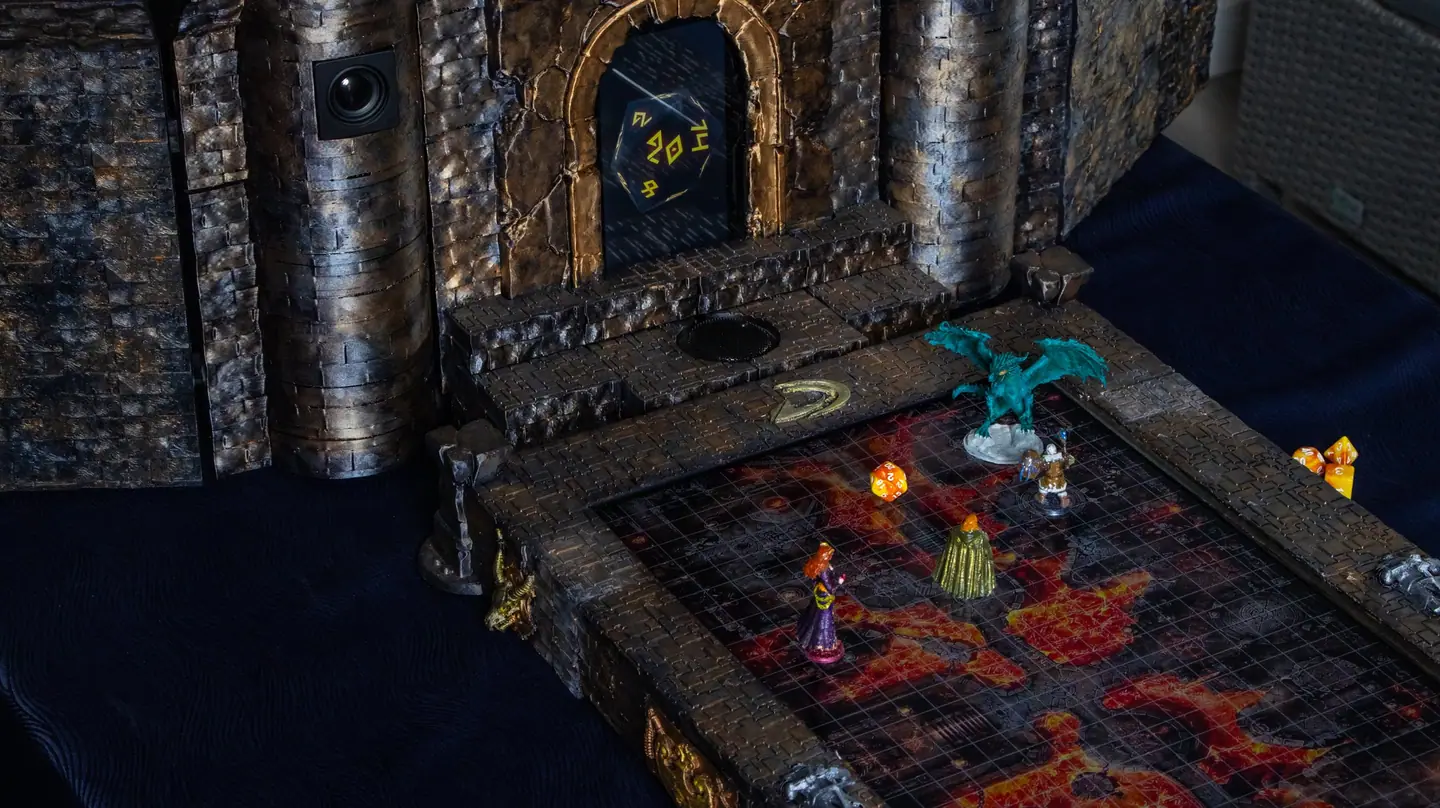
Realm Kinetics is developing Doungim around this hybrid idea. Players can continue using physical dice and miniatures while the console adds maps, visual information, game master assistance and AI driven interaction around them.
This physical digital approach matters because the social ritual of tabletop gaming is part of the product. Rolling a die, moving a miniature and watching another player make a risky decision are not inefficiencies to remove.
The future of AI tabletop gaming is likely to be defined by that balance. The technology becomes most useful when it can handle context, memory and repetitive administration without taking ownership of the moments that make a tabletop session feel human.