
A prepared map works perfectly until the players decide to go somewhere else.
That problem is familiar to Game Masters because tabletop games are intentionally open ended. The group can enter an unexpected building, travel to an unplanned settlement or turn a minor location into the centre of the session.
Generative tools can reduce the cost of that unpredictability.
A game map needs structure, not just an image
A beautiful picture is not automatically a usable map. The output needs scale, navigable space, meaningful boundaries and enough consistency for the group to understand where things are.
If the map is part of an ongoing world, it should also fit the setting and current story.
Real time changes the requirement
A pre session generator can take several attempts because the GM has time to choose. During a live session, generation needs to be fast enough that the group does not lose momentum.
The interface also matters. A Game Master should be able to describe the need in ordinary language and then adjust the result without rebuilding everything.
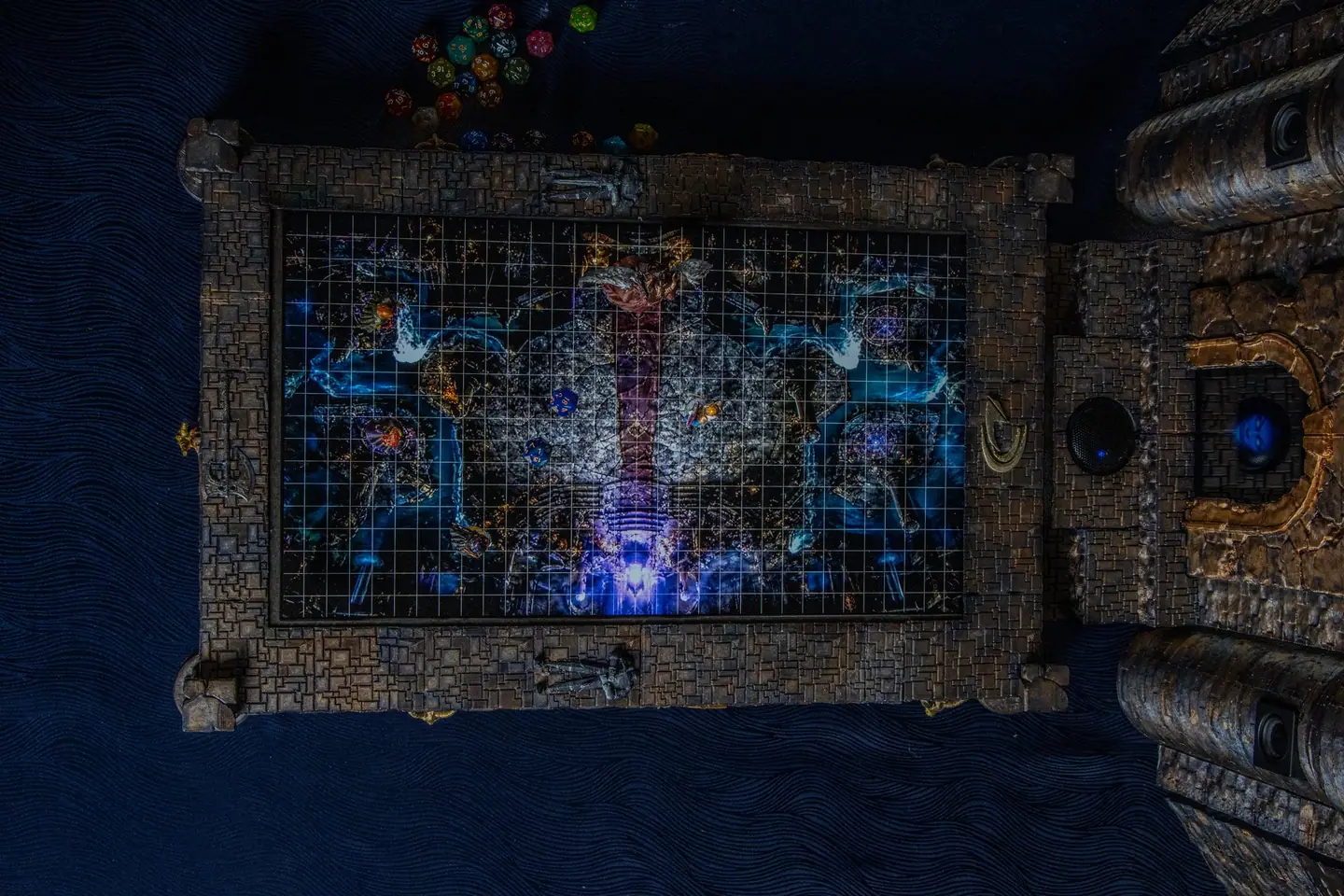
Realm Kinetics is developing Doungim with the ability to create maps and scenes during play. That functionality is designed around the moment when players take the adventure somewhere the GM did not prepare.
The important measure of real time map generation is therefore not only image quality. It is whether the generated space is useful enough to keep the game moving.