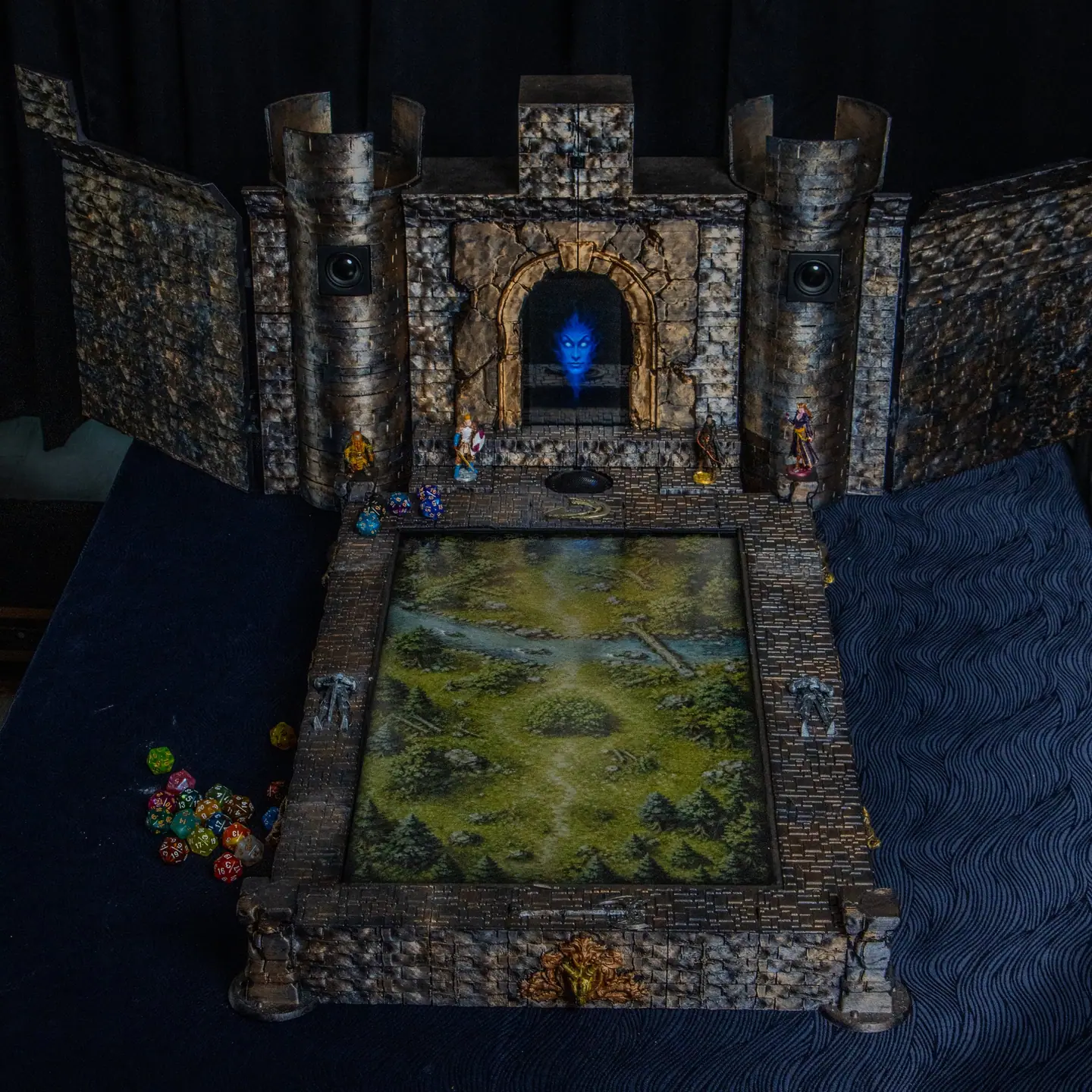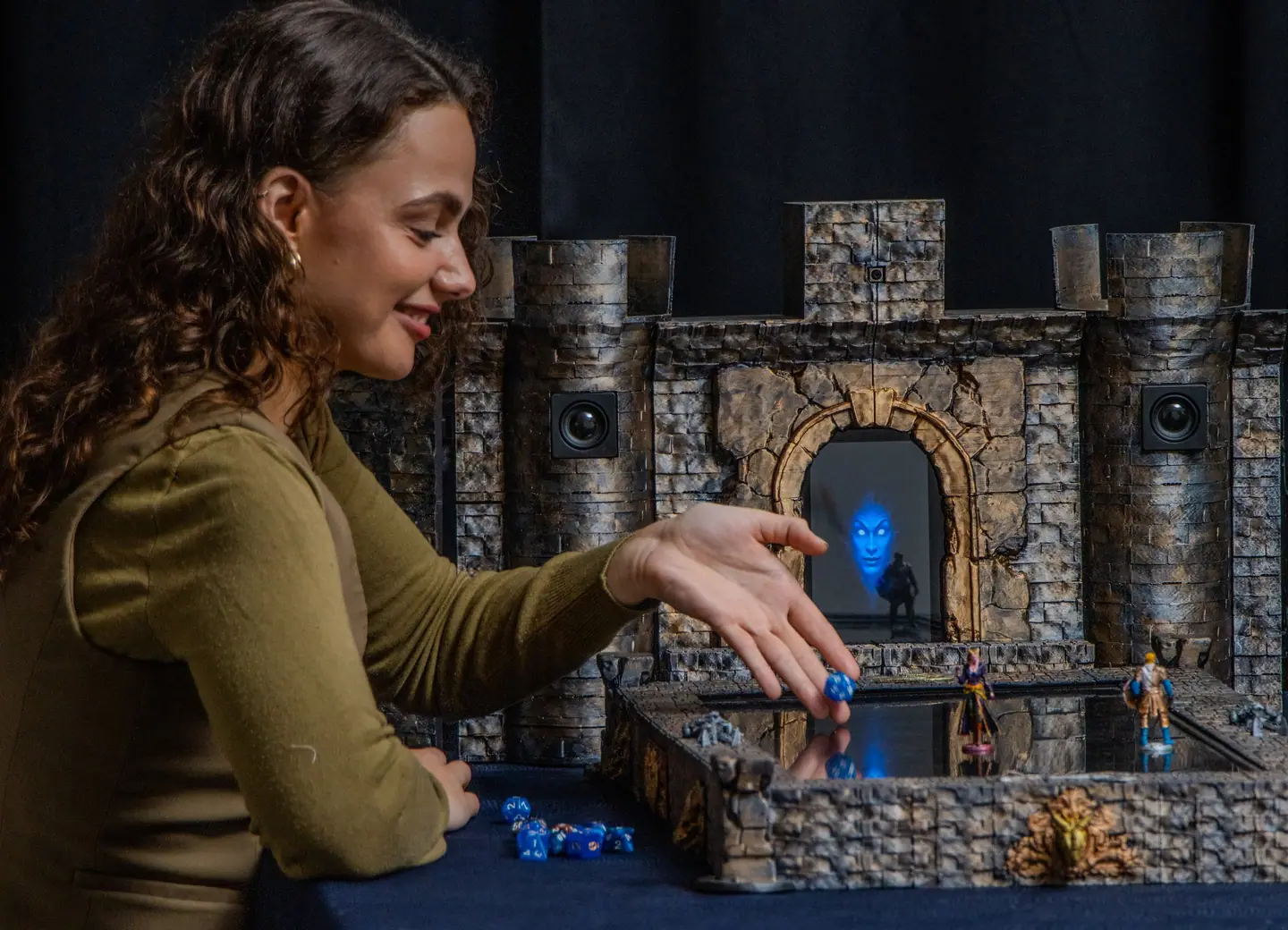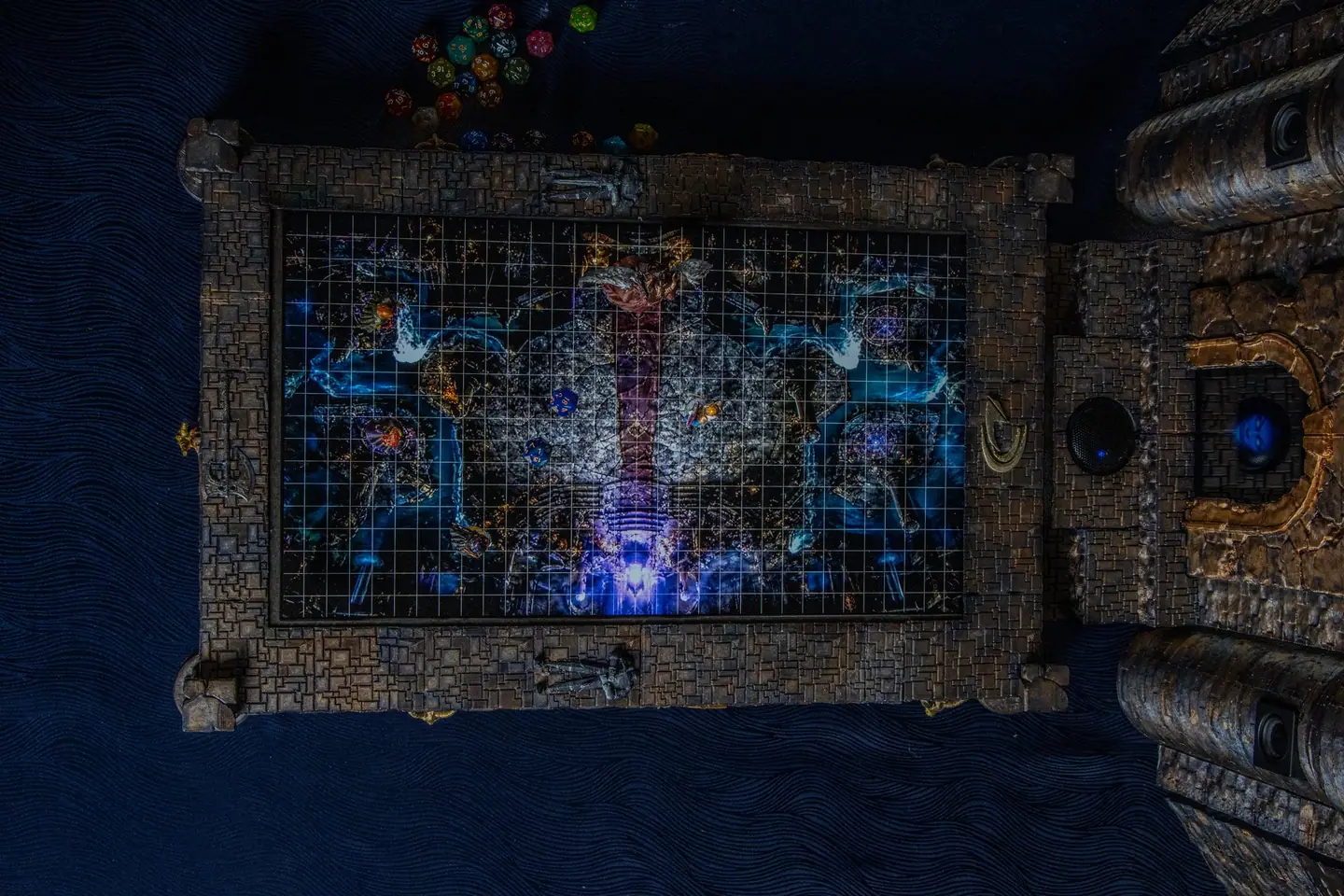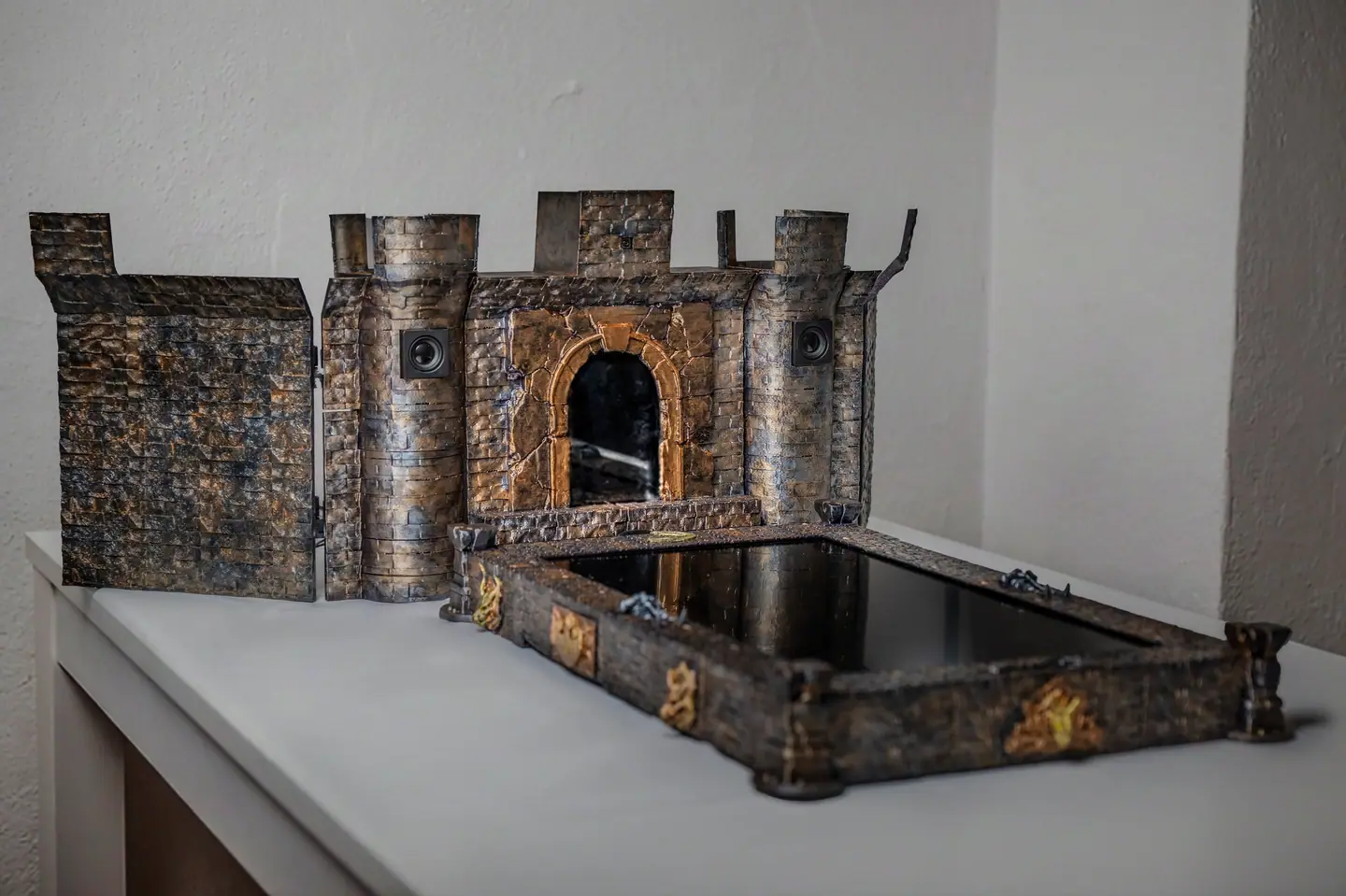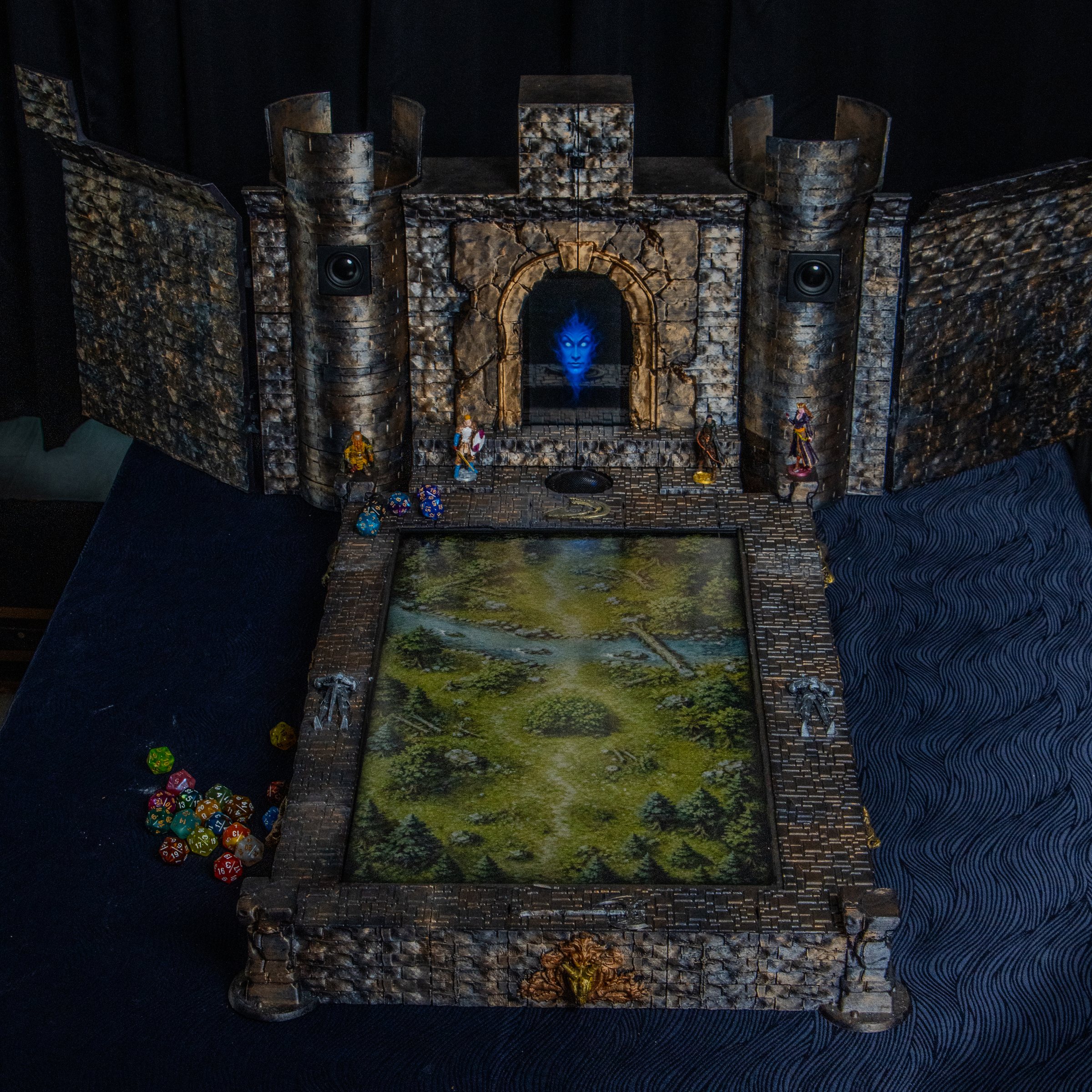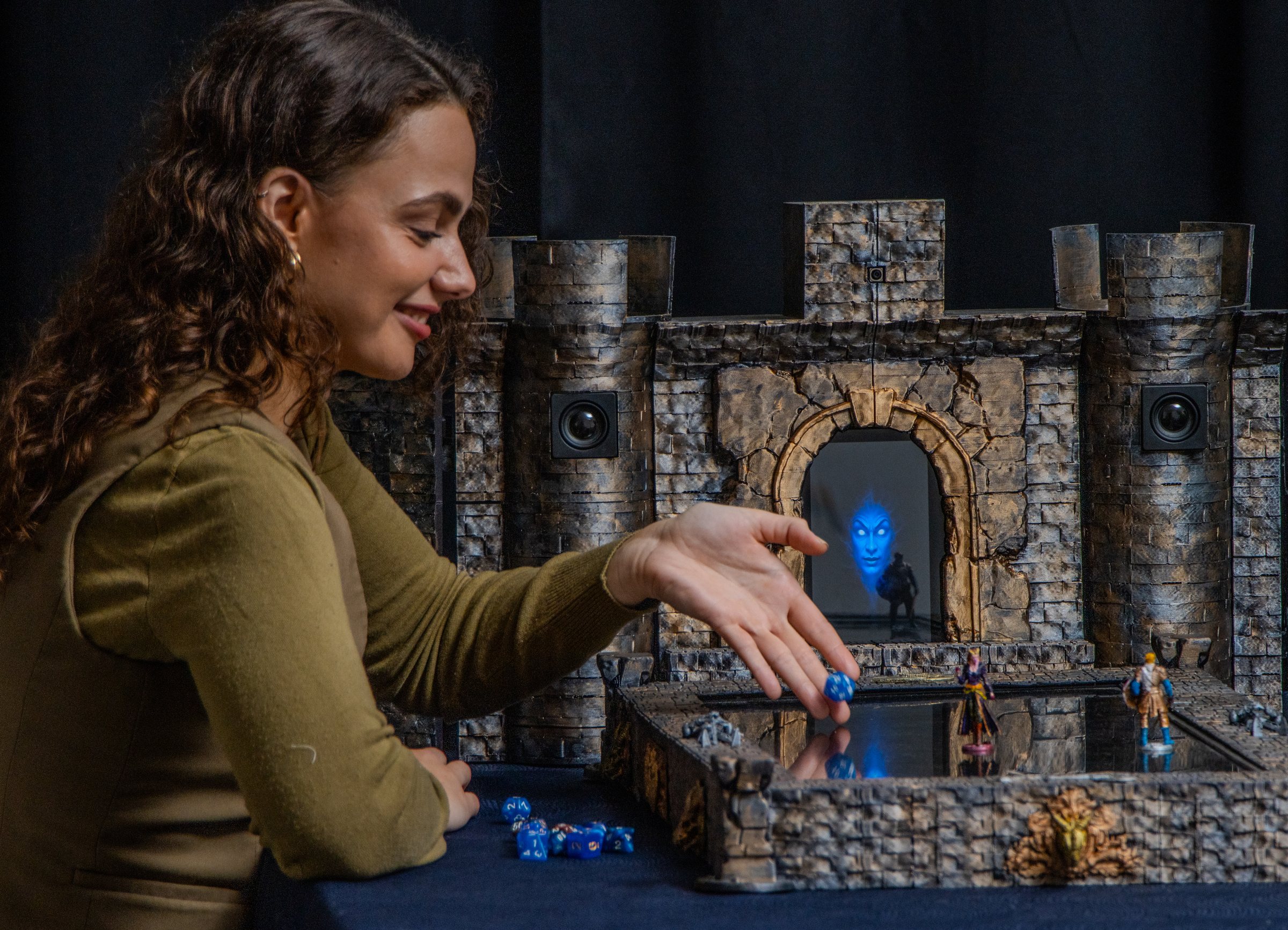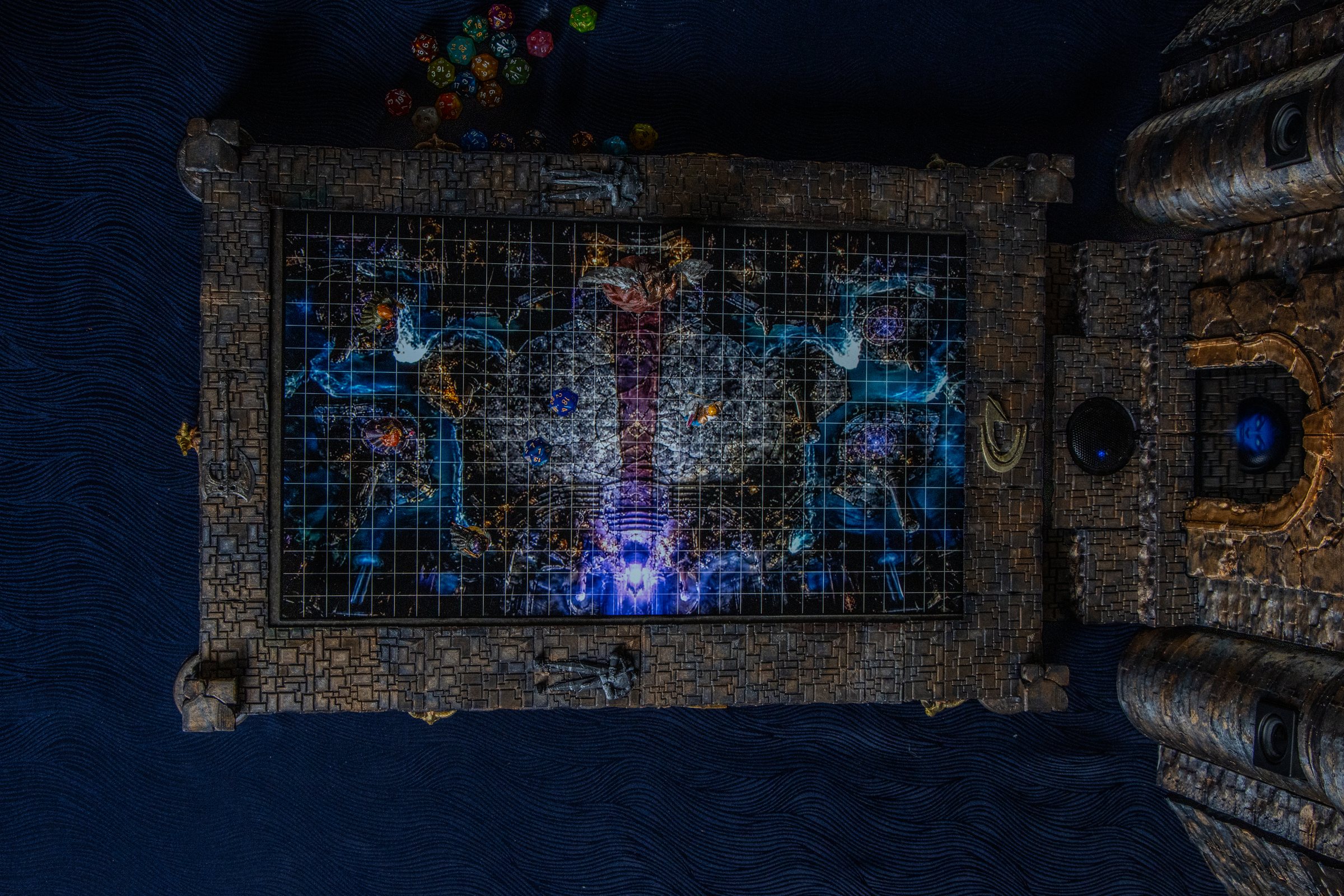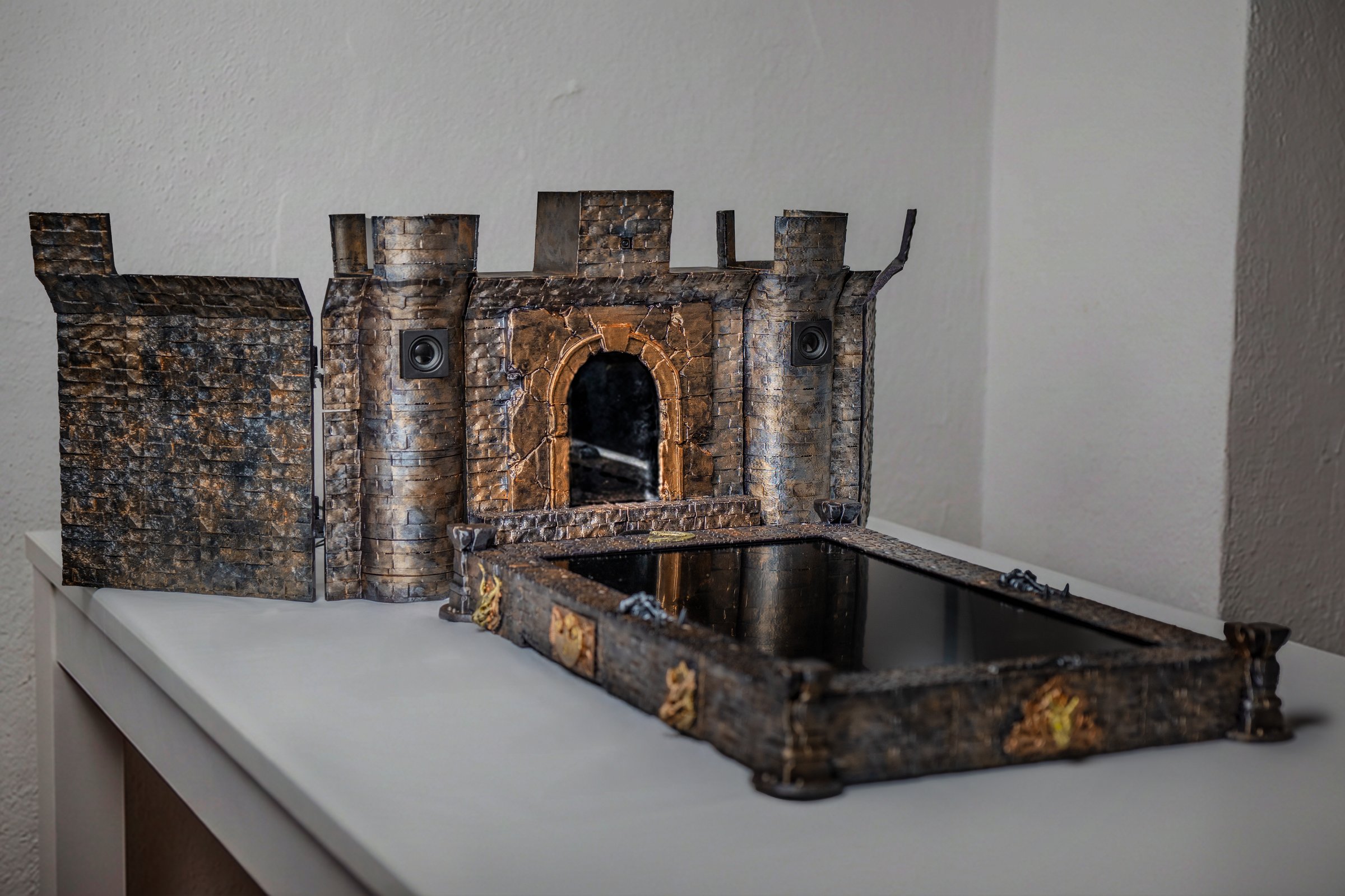
Every town already has intellectual property. It may not look like a franchise or a videogame, but it is there: local legends, industrial history, old streets, lost buildings, famous residents, folklore, disasters, migrations and stories that belong to a particular place.
Most of those stories are experienced through exhibitions, books, tours or archives. Doungim, a tabletop roleplaying games console developed by Realm Kinetics Ltd in the UK, is being built around another possibility: letting people step into those stories and play them together around a table.
The console lies flat on the table and displays a living map beneath real dice and real miniatures. A group can describe a setting, period or place, and Doungim can build the playable environment, characters and adventure around it. Creator tools are also being designed so organisations and independent creators can build, publish and potentially sell their own playable content.
A new format for local culture
For a museum, heritage organisation or local history group, that creates another kind of product. A story that currently appears in an exhibition or guided tour could also become an interactive adventure. A local writer could create a mystery set in the town. An illustrator could build a visual pack based on local architecture. A small creative team could produce an experience around a castle, harbour, railway, legend or historical event without first having to build an entire videogame engine.
The potential economic value is broader than the sale of the game itself. Playable local content could create paid work for writers, artists, historians, voice actors, designers and other creators. It could also give cultural organisations another form of digital product alongside tickets, books, merchandise and educational material.
Doungim is being built with a marketplace where creators can publish game content for other players. That means a local experience does not have to remain local to the table where it was created. A story built around one town could potentially be discovered and played elsewhere, giving its creators a route to earning from work based on local culture.
Why place based experiences matter economically
The wider market around heritage and place is already significant. Historic England reports that heritage related tourism in 2024 included 187 million domestic day visits, 14.7 million domestic overnight trips and 18.2 million international trips. Estimated spending connected with those visits was £12.5 billion, £4.8 billion and £12.4 billion respectively.
Historic England also provisionally estimates that England’s heritage sector generated £15.7 billion in direct GVA in 2024 and £39.4 billion when indirect and induced effects are included. Government figures estimate that tourism contributed £64.3 billion in GVA to the UK economy in 2024.
Doungim is not presented as a replacement for visiting a place. The opportunity is to create another commercial layer around the stories that already make a place distinctive. A playable experience can exist before a visit, during an exhibition, in a classroom, at home afterwards, or for someone on the other side of the world.
Turning cultural assets into reusable products
A physical exhibition is tied to a building and opening hours. A tour depends on a location and a guide. A playable digital story can be reused, updated and distributed repeatedly. Once a local team has created its maps, characters, writing, voices and artwork, those assets can remain available beyond a temporary event.
That creates a bridge between large parts of the UK economy. Government figures estimate that the creative industries contributed £145.8 billion in GVA in 2024, while tourism contributed £64.3 billion. Doungim sits at the intersection of games, software, storytelling, culture and physical places.
The potential is particularly relevant for smaller organisations that do not have the budget to commission a conventional videogame. If the technical work of building the game world can be reduced, more of the creative budget can go to the people who know the story: local researchers, writers, artists, performers and organisations.
The financial effect will depend on what organisations and creators choose to build and whether audiences choose to pay for it. The opportunity is straightforward: turn stories and cultural assets into reusable interactive products, give their creators a way to distribute them, and let the value travel further than one place or one event.
Kickstarter
Doungim was funded in under three hours and is live now. View the Kickstarter campaign (opens in a new tab).
About Doungim
Doungim is a tabletop roleplaying games console developed by Realm Kinetics Ltd in the UK. Its main display lies flat on the table and shows a digital game world while players use physical dice and miniatures. The system can assist a human Game Master, run a group game, or run a solo adventure, with support for remote players.
Sources for editors
- Historic England: Heritage and the Visitor Economy (30 July 2026).
- Historic England: Economic Value of the Heritage Sector (30 July 2026).
- DCMS: Gross Value Added 2024, provisional (5 February 2026).